Monday, September 29, 2014

Sermon - In or Out?

In or Out?                                                                                                       Matthew21:23-32
Panzer Chapel Liturgical Service, Boblingen, Germany                             September 28, 2014

Whether we admit it or not, we want the Bible to be the ultimate self-help book.  We want to be able to open its pages and find the answers to the questions that plague us or annoy us. And, at our worst, we want the Bible to justify the things we think we need to believe to be happy and successful in this world. But is that really what the Bible is for? Hebrew Bible scholar, Mark Brettler reminds us that there is “a danger in saying, ‘The Bible says …’ and then filling in that sentence with just one single thought, because very, very often, in almost anything that you could ask, the Bible has more than one perspective.”[i]

Today’s gospel lesson challenges what we think it means to be a person of faith. In this passage, Jesus is confronted by the Scribes and Pharisees (again), hoping to catch him in a chargeable offense. As is so often the case, they don’t start the conversation by accusing him of anything, but try to trip him up by asking a question or two. They are concerned that Jesus is claiming authority they believe belongs to them, or those they approve. Adding insult to injury, Jesus is hanging out with people who are entirely unacceptable. This calls Jesus’ character into question, for according to the standards of the community, these people will bring Jesus down to their level. But actually, the opposite is true. If we read carefully the gospel accounts, we see that Jesus was a great judge of human character. The difference was that he saw value where others saw only flaws.”[ii]

The religious leaders’ attempts to catch Jesus in a theological untruth always made them look bad. In this instance, Jesus answers their questions with a question. They want to know why he thinks he has the authority to preach and teach in God’s name. He seeks to unmask their intent in asking the question. In asking them about the ministry of John the Baptist, who has been beheaded for his trouble, he wants them to come down on one side of the argument or the other. But they play it safe, answering, “We don’t know.”

Now there are times when “I don’t know,” is the right answer – because it shows openness to new thoughts, ideas, or directions. But then there are the times when “I don’t know” is just a dodge to keep from having to make your beliefs known.[iii]  In this instance, the Scribes and Pharisees were all about taking the safe way out and not showing their hand.

So Jesus doesn’t answer their question directly. Instead, he tells a story about two children. Both were asked to complete a task. One said “no,” but ended up doing his father’s bidding. The other said “yes,” but didn’t. Jesus’ question is, “Who did what the father asked?” Now the answer is obvious – the one who did the work, even though reluctant in the beginning, was the one who gained the father’s favor. This story is reminiscent of the parable of the Good Samaritan, where the one rejected by the community actually acted in accordance with the will of God. And this sets up an interesting, and somewhat troubling, paradigm. For it changes the way we think about what it means to be members of the family of God.

In his book, Why Did Jesus, Moses, The Buddha and Mohammed Cross the Road? Christian Identity in a Multi-faith World, Brian Mclaren tells the story of the first Muslim family he ever met. On returning from their honeymoon to a small, inner-city apartment, he and his wife found that Brian’s brother and friends had not only moved in all their furniture and belongings, but had also filled the small bathroom from floor to ceiling with balloons. Driven by their need to use the facilities, they gingerly pulled hundreds of balloons out of the room. Soon the bathroom was empty, but the floor of the entire apartment was covered with a bobbing tide of red. They went to bed knowing that in the morning, they would have to find a way to rid their home of the “red menace.”  Enter Aatif. As Brian sat on the front step of the building pondering how to tackle the problem, his young Muslim neighbor sat down to talk. After a few minutes, Brian asked, “Do you like balloons?”  Soon, Aatif had gathered a dozen kids to help carry the balloons away. Within minutes, all of the balloons were gone.[iv]

We never know when the watershed moments of our life will happen. For Brian, Christian pastor and teacher, this incident started a process of thinking about Christianity and other religions in a whole new way. Over the next year, Brian and his wife Grace shared life experiences with their neighbors many times, learning about faith traditions very different from their own. And in those times together he learned a very important lesson.  “In sharing table and space with those who are outside our own realm of belief we are able to see the connections we share as children of the Creator. Our Christian identity cannot be a locked door that keeps others at a distance.[v]

Our world today is often defined by “THEM” versus “US”. Whether it is in religion or politics or economic outlooks, we often gravitate towards those who share similar beliefs and common experiences. And in the process, we can slowly be drawn into the mistaken understanding that people need to conform to our expectations to be acceptable.

This week, world leaders made speeches before the UN General Assembly, condemning the connection between religion and terrorism. And while many spent some time finger-pointing at the other side, there was remarkable cohesion in their statements. But making a speech at the UN and putting those thoughts into practice are two different animals.  Using violence to further a faith agenda is not a new predicament. The biblical record is filled with the same story, over and over again, from the Garden of Eden to the Tower of Babel to the fall of Jerusalem, from the spreading of Christianity as a minority faith to becoming an imperial one, from the Crusades to the Balkans to the Middle East.  In each of these historical moments, we have bought into the premise that hostility to other faiths makes us stronger. But in reality, just the opposite is true. Brian Mclaren says it like this:
In contrast to many ancient religions, our story of Creation does not begin with a war between gods. It begins peacefully, in the creative words, ‘Let it be’… All human beings, together with all living things, have their origin in the same unfolding story of making space for one another… Within that spacious story, all human beings share the same divine image. All human beings are, ultimately, sisters and brothers in one human family created in the image of God… the phrase, “God loves us” is only a fragment of the truth, a dangerous fragment, in fact; it must be reunited with “God loves others too.” [vi]
This concept was maddening to the religious leaders who ultimately condemned Jesus. They saw their “chosen-ness” as a wall that included those who kept to a strict moral code and excluded all others. Over the years, succeeding generations have fallen into this same trap, and the distances between not just Christians and non-Christians, but different flavors of Christians only seems to get wider and deeper with time.

So here is where faith gets put into action: What would happen if we made small steps toward changing that pattern of behavior?  What if we lived as people who believed, as Jesus apparently did, that all people are created to be a part of the Kingdom of God? What would that require of us? A different way of thinking? A different way of living? It’s really quite difficult, even scary. to think about, isn’t it? – and why these religious purists ultimately found a way to sentence Jesus to death.
For me this passage brings two questions to mind, which I share with you today. First, how do I relate to people who are different from me?  Am I welcoming and curious about others’ faith journeys, or do I feel the need for people to see things my way… assuming of course that my way is the right way to think. Do I reject people who are different from me? Do I do all I can to see others as those whom God has created and loved? Or do I try hard not to expose myself to “the other,” hoping to keep my thoughts and theology as pure as possible? Or am I just afraid of the unknown and don’t know how to come out of my shell?

Second, what do we mean when we talk about salvation? For many, the salvation conversation is directed at the question, “What will happen when I die?” Is that all that salvation is about? Or we need to think of it in a bigger way?

Will Willimon, former dean of Duke University Chapel and United Methodist bishop, has written a most interesting book entitled, Who Will Be Saved?  I pulled this book off of my bookshelf, because I think that this is the question Jesus leaves us with as he ends this conversation with the Pharisees. Now, when I read this story, I’m not sure the answer is what I thought it was at the beginning.
Will says it like this:
Most Christians think of salvation as related exclusively to the afterlife. Salvation is when we die and get to go to heaven. To be sure, Scripture is concerned with our eternal fate. What has been obscured is Scripture’s stress on salvation as an invitation to share in a particular God’s life here, now, so that we might do so forever. Salvation isn’t a destination; it is our vocation. Salvation isn’t just a question of who is saved and who is [not], who will get to heaven and how, but also how we are swept up into participation in the mystery of God who is Jesus Christ… Heaven is when or where one is fully with God – salvation. [vii]
In the communion liturgy, there is a part of the service where we say together, Christ has died. Christ is risen. Christ will come again.  And placing this statement of faith against the premise that salvation is not a point in time, but a way of life, I made this realization. Jesus saves me every day. It is certainly the promise of the crucifixion and resurrection that he saved me in the past, but he also saves me today and will save me tomorrow, and for eternity, if I let him.
The prostitutes and tax collectors didn’t gain membership in the Kingdom through right-thinking. They gained it through right-living. Their actions spoke louder than their words. Salvation is not just about believing – it’s about doing something with that belief to fulfill God’s intentions for a world devoted to Him.

Once we buy into the premise that our salvation is in the past, we close ourselves to all the ways in which salvation can be new to us every day. In our opening hymn, we sang, “Morning Has Broken” and in one of its verses we heard,
Mine is the sunlight, mine is the morningBorn of the one light, Eden saw playPraise with elation, praise every morningGod's recreation of the new day.[viii]
 I think it’s one of the most important lessons of the day: Every day offers us an opportunity to begin again, to experience God’s salvation anew. The lessons from Ezekiel and Philippians give us clear instructions and great hope that God’s way into the future will give us life – a fullness of life that we can never have if we trust only in our own understandings of what it means to be a part of God’s world. Make no mistake: God is at work in us.

I’ll end with this quote from Brian Mclaren from his new book, We Make the Road By Walking. It is a lesson which I most need to hear today, and every day. It is the lesson that reminds me why trying and failing and forgiving are all a part of the journey we call faith. And I send you out with these words.
 “… faith was never intended to be a destination, a status, a holding tank, or a warehouse. Instead, it was to be a road, a path, a way out of old and destructive patterns into new and creative ones. As a road or way, it is always being extended into the future. If a spiritual community only points back to where it has been or if it only digs its heels where it is now, it is a dead end or a parking lot, not a way. To be a living tradition, a living way, it must forever open itself forward and forever remain unfinished – even as it forever cherishes and learns from the growing treasure of its past.” [ix]
Let us we go forth to love and serve the Lord.  Amen.


[i] “The danger of saying, 'The Bible says...'”,Mark Brettler – Faith and Leadership blog www.faithandleadership.com November 21, 2013.
[ii] Why Did Jesus, Moses, The Buddha and Mohammed Cross the Road? Christian Identity in a Multi-faith World – Brian Mclaren – 2012 – page 3.
[iii] “Matthew,” The New Interpreter’s Bible, M.Eugene Boring, pages 410-11
[iv] Ibid, pages 28-9.
[v] Ibid, page 31.
[vi] Ibid, page 103.
[vii] Who Will Be Saved?  Will Willimon – 2008 – page 3.
[viii] Elenor Farjeon, 1931.
[ix] We Make the Road By Walking – Brian Mclaren – 2014, page xi.

Sunday, September 14, 2014

7 Days of Thankfulness

Last week I was challenged by my friends Betsy Myers and her daughter Johannah Myers to name three things for which I am thankful for a week. I really did reflect each day on what I wanted to share. I, in turn, tagged my sister and sister-in-law to do the same.

This exercise made me realize that despite the difficulties I face each day, they are just speed bumps in comparison with the blessings that I have received. I posted them on Facebook each day, but I have consolidated them here to share in one place, and with those who may not have had the chance to see them.

7 Days of Thankfulness

Day 1 - (9/7/14)
1 - thankful that our house is almost all unpacked and starting to feel like home.
2 - thankful for German friends who have helped us unpack boxes and put up new light fixtures without electrocuting ourselves.
3 - thankful for Facebook, where I can keep in touch with friends who live all over the world, rejoicing, praying and laughing with them across the miles. 

Day 2 (9/8/14)
1 - sunny days (it's rained almost every day since we got here) but it's not too hot.
2 - good books ~ I've caught up on my reading and enjoyed some wonderful stories,
3 - the opportunity to preach yesterday, grateful for the warm reception they gave me.

Day 3 (9/9/14)
1 - thankful for PWOC (Protestant Women of the Chapel), where I can be a teacher or a student and be loved for who I am.
2 - we saw my vehicle at the processing center tonight... Violet msy be coming home soon.
3 - thankful for the opportunity to make new friends and explore ministry possibilities for this fall.

Day 4 (9/10/14)
1 - my husband Shawn, who brought me on this magical adventure called marriage, we're still laughing a lot,
2 - my family of origin, parents Bill & Doris, brother BJ, sister Ola and their spouses and children... sometimes I wonder why I am the way I am, and then I look at you and know you understand me, at least a little bit,
3 - my "other" family, Shawn's dad Tim, sister-in-law LoriAnn and her family, and all the other extended family members who accepted me, no questions asked, and especially for Shawn's mom, Lee Ann, who always took my side... I miss that.

Day 5 (9/11/14)
1 - Thankful that cooking gives me so much joy! and that my spouse will eat almost anything, except mushrooms (and broccoli and peppers and cucumbers...).
2 - Thankful for all of the spices in my kitchen and happy to use them in many different ways.
3 - Thankful for living in so many places that have four seasons. Fall is well on it's way - cool nights make for good sleeping and colorful leaves make for a beautiful drive every day.

Day 6 (9/12/14)
1 - we picked up the truck today and she is fine. I don't know how you one-car families do it.
2 - Command Strips, they make the picture hanging so much easier when you have concrete walls,
3 - thankful for learning to crochet, and all the wonderful friends that has brought me.

Day 7 (9/14/14)
1 - Glad that a good night's sleep can give you a new perspective. Yesterday was a hard "moving to a foreign country and living in a 100-year old house" day. Making a new plan for hooking up 110V electronics and purchasing 220V versions for the ones that we can't get to work.
2 - Grateful to spend part of each day reflecting on the goodness in my life - it's all about perspective.
3 - Most of all - Glad to share in the goodness of a wonderful God who reminds me each day of how much I am loved and how I am called to live in his image. Being thankful is not the end... now I am called to live out that thankfulness in my interactions with others.  Keep me faithful, Lord.

A special thanks to my sisters Ola  and Lori Ann  and their families, who have also shared their joys... we are very richly blessed.

Peace, Deb

If the only prayer you said in your whole life was, "thank you," that would suffice. ~Meister Eckhart

Gratitude is a quality similar to electricity: it must be produced and discharged and used up in order to exist at all. ~William Faulkner


Wednesday, September 10, 2014

Moving Musings 2014 - The Closing Chapter

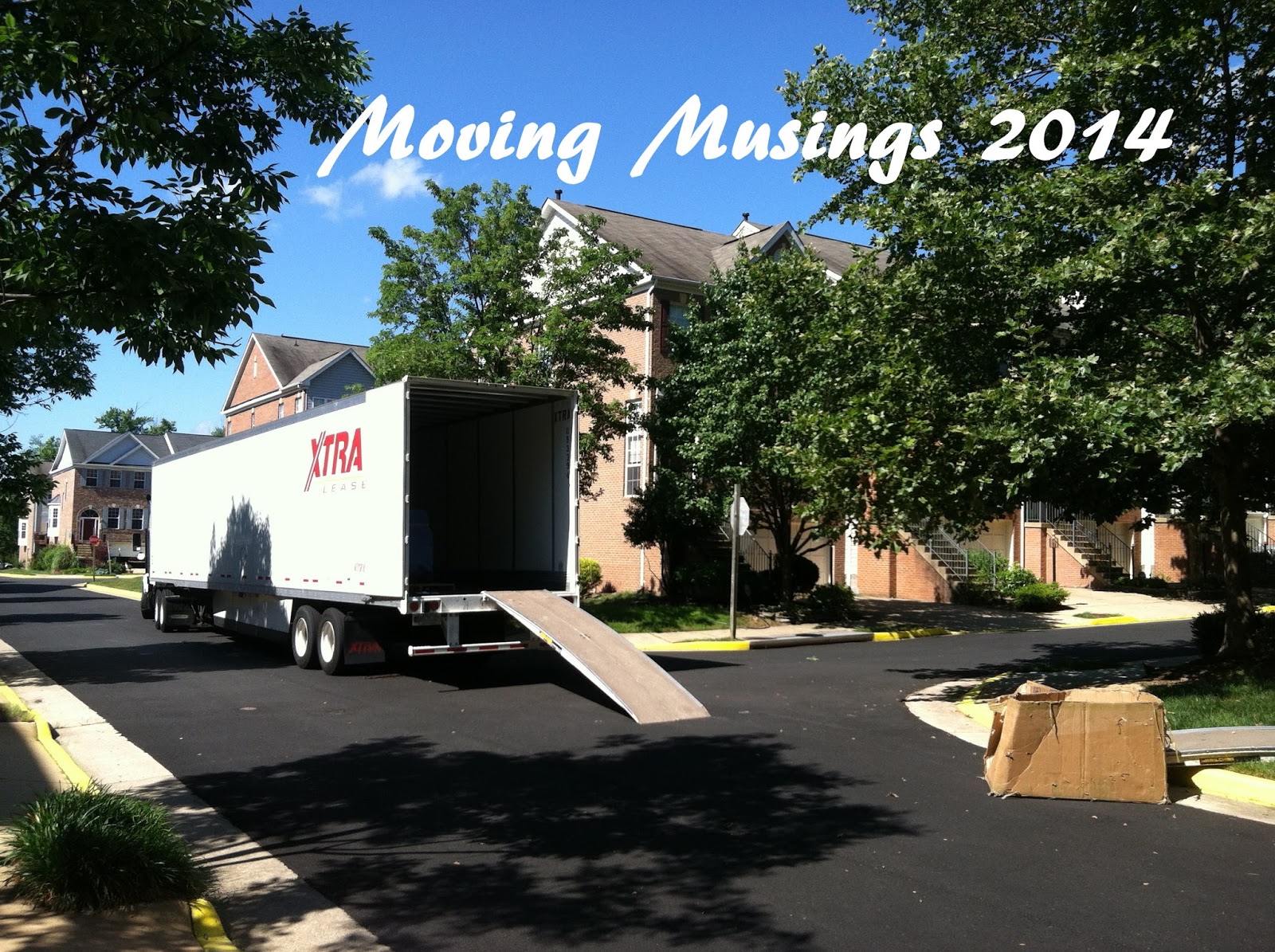
It feels like we have been moving forever. The process started in early March when we found out that we were returning to Germany for another assignment at US EUCOM (European Command). It continued with the separation of goods to be shipped and those to be stored in April, the shipping of our second car in May, and the packing of our Household Goods (also known as HHG) in June. July brought an end to our time in Spokane and a trip across the US, until we finally shipped the truck and flew out of Atlanta the third week in July.

Fascinating and a little scary
The German adventure started with driver's license tests, a 3-week hotel stay, looking at over a dozen potential homes, and settling on just the right place.  Another four weeks and our HHG arrived and it really started feeling like home. Even the process of unloading some of furniture over the second floor balcony did not dampen our excitement, although I did document the process with lots of photos, just in case there was a "terrible accident,"

We received some much needed help installing a
new dining room light fixture

Smart and sleek
Our last milestone will be receiving Violet, my 2013 Avalanche. Yes, we were crazy to ship her, yes, it will be a challenge parking her and her gas mileage is pretty abysmal, but she's mine and I love her... She apparently arrived yesterday morning, but we have not received official word to pick her up yet. The process of receiving and registering a vehicle is daunting, to say the least, with 2 inspections, and 3 different lines to tackle. We will both have to work at it together if we want to get through the process in one day. And get in line before 7:00am... But in the end,, the days of being a one-car family will be over for a while, and that will make us both very happy.

Violet - Not in jail,
just locked away for her own protection
She looks good from the outside, which is a relief after
the problems that many have had this moving cycle.


It has been good to return to a place where we previously had such a great experience. Even so, moving overseas requires tenacity and patience. Nothing ever happens in one or two visits or calls. Procedures sometimes seem burdensome and arbitrary. And the language barrier is often a challenge that must be taken on with our trusty yellow dictionary. On the good side, we again find that if we try to communicate in German, people are often patient and kind... or they just switch to English if they find our attempts too painful to bear.

We thank you for your prayers and your attention in this time of change. We hope the best for you all as your go through your own changes.

Peace, Deb


Sermon - Dressed for Success

This is the first sermon since I have returned to the Stuttgart military community.

1st Lesson Exodus 12:1-14
2nd Lesson Matthew 18:15-20
Sermon Lesson Romans 13:8-14

I brought a bag of Clemson-related clothing to the children's time... Clemson t-shirts, a Clemson sweatshirt, even orange pants and socks. We talked about how we often dress for sports events to help people know which is our favorite team. Then I talked about how Paul calls us to "put on Jesus" so that others will know how we're supposed to live our lives.

Sermon Title       "Dressed for Success"

They say that clothes make the man - or woman.  I have a pastor friend who went to visit a couple who were having a baby.  The mother-to-be had been admitted to the hospital in the middle of the night in labor, and was progressing nicely, but still able to have visitors.  Steve was going to a meeting where he wanted to make a good impression, so he wore his clerical collar, a sport coat, dress slacks and shiny black loafers.  The only problem was that his usual visitation outfit consisted of blue jeans, T-shirt and Levi jeans jacket, so when he walked into the room, the new mom got this pained look on her face and  asked her husband, “Is something wrong with the baby?  I must not be doing well if Steve came to see me all dressed up.”

I’m not really a fashion bug – I've spent enough time watching the TV show “What Not to Wear” to realize that I need to clothe the body I have, not the one I want. But I have also spent a lot time the last week unpacking my HHG goods and asking myself, “Why do I have so many clothes?”

Fashion trends come and go. In our closets or storage, you might find favorite t-shirts or sweaters or jeans from days gone by. Maybe they have been deemed too worn to wear in public, or maybe the day has not come when we will fit back in them, but we still hold on to them because they seem to represent a little piece of who we think we are.

Walking around the campus at Patch or Pazner or Kelley Barracks
, you can know a lot about the people who live in this military community. BDU’s, DCU’s, ACU’s, ABU’s, flight suits… the uniforms designate service, rank, jobs and even countries where people have served. Civilians wearing ties and professional clothing distinguish themselves from those of us wearing jeans and yoga pants. Even I wear this robe and stole to declare something about myself – it helps define my role in the community as a pastor in the church. Yes, you can tell a lot about our community from the way we dress.

Last clothing analogy: Ten years ago, my husband and I were blessed to come to Stuttgart for the first time, staying two wonderful years. I remember an instruction to be sure that we dressed inconspicuously when we went out into the economy – no blue jeans – no tennis shoes – no flip flops. The funny thing was that the first time we went downtown, it seemed that everyone around us was wearing blue jeans and tennis shoes or flip flops. The assumptions were all wrong. It’s not blue jeans and t-shirts that define us as Americans any more than dirndls and lederhosen define who Germans are. The citizenship of the world and of the Kingdom are much more complicated than that.

This is not a sermon about successful fashion trends. In fact, in today’s epistle lesson, Paul is telling us that God doesn’t care about our wardrobes, but instead looks to see how our hearts and our lives are clothed.  We may say that we are “Christian”, but do our words and how we behave match? Can people see Christ in our lives, or are they too cluttered with extraneous accessories to let Christ’s light shine through?

Most of little girls I know love to play dress-up, and most grandmas will make available to them the latest in dress-up fashion.  From feather boas to high-heeled shoes, I have seen kids pile on so many articles of clothing and jewelry they could hardly shuffle around the room.  That’s how many of our lives are – cluttered with the trappings of how we want people to see us.  Being clothed with Christ not only gives us the opportunity to free ourselves from the hold that our possessions have over us, but also allows people to see who God has created us to be.

Paul says this all begins with something simple – love. Love is what defines who we are disciples of Jesus Christ.  Love is the foundation of our lives because we are children of the living God, who loved us so much that he sent Jesus to die for our sins.  When Paul talks about the commandments, he is not just saying these are the things we should or should not be doing -- 1-2-3.  He turns these negative admonitions (You shall not…) into one positive action: Love your neighbor as yourself.

The commandments are not a list of does and don’ts … they are examples of how people who love live their lives.  As “people of the Book,” biblical teachings can only truly inform and shape us if we are guided by love.  When we think of religion and faith as the dimensions of our lives which tell us what NOT to do, then we have missed the boat.

In many ways, we are like rebellious teenagers - “my dad won’t let me do that thing I want to do because he doesn’t want me to have any fun.”  But what would happen if we thought about our faith lives another way?  From the beginning of creation, God created the world to be good, to be whole, to be lived in the image of God. As we grow in faith and practice living that faith day by day, hour by hour, we claim the promises God made with the proclamation, “It is good.” Love is the guiding force in God’s creation of us and the world around us. Love is our response as we seek to fulfill and perfect the lives that God created for us.

Love is peculiar.  We think of it as an emotion, but looking through God’s eyes, it has to be so much more.  God showed us that love is a state of mind.  Love is action.  It is a way of life.  It is the foundation on which all of our hopes and dreams are built, and the parachute which catches us when we get caught jumping off the cliff in Christ’s name.  It is the standard by which our lives are measured… as the American folk hymn says, “they will know that we are Christians by our love.”

Love is complicated - and confusing - and often contradictory with what others think our lives should be about.  And we all know it is very difficult to maintain a Christian lifestyle and witness in the modern, consumer-driven world of today.  Hard because we are always tempted to measure ourselves up to someone else’s standards.  Hard because we want to be like other people… to stand out only when WE choose.

I am reminded of a story told by author Dan Taylor.  In a letter to his son Matthew, he told a story about being in the 6th grade.  Now from all accounts, Dan Taylor was considered by everyone to be really cool.  And it would have been a perfect year for him if it had not been for Miss Owens, one of his teachers.  Apparently, she knew that he still had a few lessons to both learn and teach.  Anyway, each week, the class got a lesson in square dancing.  Dan described the weekly ritual in this way:
Every time we went to work on our square dancing, we did this terrible thing.  The boys would all line up at the door of our classroom.  Then, one at a time, each boy would pick a girl to be his partner.  The girls all sat at their desks.  As they were chose, they left their desks and joined the snot-nosed kids who had honored them with their favor… The boys didn't like it… but think about being one of those girls… waiting to get picked… who would it be… would I be last.   
Think if you were Mary, a nice girl, but not very witty or pretty or smart.  She’d had polio when she was younger, affecting an arm and a leg… and she was fat…  Here’s were Miss Owens comes in.  “Dan, next time we have square dancing, I want you to choose Mary.”  She may as well have told me to fly to Mars.  I couldn’t even conceive of what they would do to my life when she did a really rotten thing.  She told me that it was what a Christian would do.  I knew immediately that I was doomed… because I knew that she was right. 
I agonized.  Choosing Mary would go against all the coolness that I had accumulated. The day came when we were to square dance again.  All I could hope was that I would get to choose last.  But instead I was first. “OK Dan, choose your partner.”  I remember feeling very far away.  I heard my voice say, “I choose Mary.” Never has reluctant virtue been so rewarded.  I still see her face undimmed in my memory.  She lifted her head, and on her face was the most genuine look of delight and pride that I have ever seen.  It was perhaps that best day of my life, not because I had done anything so great, but because this simple gift was exactly what Jesus would have done. (Taken from Letters to My Children by Daniel Taylor, InterVarsity Press, 1989.)
It is very easy to let ourselves be turned away from the light of Christ to the darkness that surrounds us, to say “no” when “yes” is the difficult, but right thing to do.  The life of faith is hard work.  And to keep ourselves on track, we only have one thing to do for the rest of our lives… practice.  We have to practice loving people who are hard to love, so that after a few years or decades, we can do it without thinking.

There are glimmers of hope in all of our lives and in the life of this congregation. Living in an international community offers special challenges and opportunities to practice love in unusual ways. As military faith communities, we take up offerings to support local and international missions which bring Christ into the lives of many who are in need. But every encounter we have with a person with a different accent or experience or faith journey gives us an opportunity to put on the face of Christ and love, because we can and because it’s what we were created for.

And if we allow it, strangers will become friends. And that is exactly what life in Christ is all about… just practicing our faith, one day at a time.  And hopefully with enough practice we will realize that clothing ourselves, our lives, in Christ is really to only way to dress for success-- Jesus’ kind of success, that is.

Peace, Deb

Tuesday, August 19, 2014

Moving Musings 2014 - I see you...

As we near the time to getting our household goods and vehicle, I have been running a lot of errands, both on the military posts in our area and in the German community. We are gathering the things we need to make for an happy and efficient life. And it seems that everywhere I go, I see someone I know. Now, it's true, I have run into several people that I have known from our previous assignment here, or from somewhere else. But that's not what I'm talking about.

I'm talking about seeing people around me, and for a split second, I see the face, the posture, the profile of some I know back home. They say that everyone has a double, a doppelganger, somewhere in the world. But at second glance, these are not twins for the ones I see in my heart. There is only a slight resemblance, or maybe even none at all. But it does help me think about how much influence the people in my life have on me, and how they are with me, even though we are separated by time and space.

I got this fortune cookie a few weeks before we left Washington, and I found it when I was cleaning out my wallet today. I made me think about how attitude is a big part of dealing with change in a positive way. This is a great reminder that there are new friends just around the corner. Some of them know people you know - some of them have more things in common with you than you could ever imagine.

So through this process, I am not only appreciating the friendships that have come before, but am also in great anticipation of the ones that are to come. And know that whether these friends endure for a lifetime, or we are connected for a short period of time, what we share is valuable and important.

When Jesus speaks to his disciples at their final meal together, John records four chapters of wisdom with the ones he will leave behind about it means to be connected to one another, in friendship and in love.
As the Father loved me, I too have loved you. Remain in my love. If you keep my commandments, you will remain in my love, just as I have kept my father's commandments and remain in his love. I have siad these thing to yu so that my joy will be in you and your joy will be complete. This is my commandment: love each other as I have loved you. No one has greater love than to give up one's life for one's friends. You are my friends if you do what I command (John 15:9-14 CEB).
I'm sure that most of us rarely think of friendship as sacrificial in nature. Instead, we see the benefits that friendship affords us, things like laughter and sympathy and holding one another up in times of need. But sometimes friendship requires us to go deeper, to take risks and to be willing to put ourselves and our friendships on the line. Military people get that - military inspired stories show the strength of friendship and how lives are often at stake each and every day. The lessons I have learned through being a part of the military community help make me a better person, a better pastor and a better person of faith.

So when I walk around a corner and get a glimpse of someone who looks like you, know that I am remembering fondly the time we shared, and saying a prayer for your life wherever you are. I hope that you will do the same for me.

Peace, Deb

Wednesday, August 13, 2014

Moving Musings 2014 - Still waiting for routine...

Some people have asked if moving to overseas is harder or easier the second time. The answer is “Yes.” I know it’s not a yes or no question, but I have found it to be both harder and easier. The easier part comes in knowing how to get around, focusing in on where we wanted to live, having friendships with people already here and some coming in at the same time. The easier part comes in knowing how hard it will be.

The harder part is in knowing that there is fun stuff around the corner, but not yet. Not until the household goods come, until we are no longer a one-car family, have internet at home, making new friends and establishing a routine. I have unpacked our quick shipment things and done some laundry with our new washer and dryer. I have asked why I shipped some things early and not other things. I have a semi-formal dress appropriate for the Air Force Ball in three weeks, but no shoes to wear with it. I have a hot pot for boiling water and a coffee press and tea bags, but not cups for hot beverages (Thrift Shop, here I come).

I took some first steps today in establishing a routine.  I am attending my first Crochet/Knitting Group today and meeting with someone at PWOC on Thursday to see where I might fit in to their ministry. We have attended worship every Sunday, visited with old friends, and looking forward to beginning our life here again. It just doesn’t feel started yet.

The good news is that it this “in-between” time will be good for me, even if it feels unsettled and a little uncomfortable. I have some books to read, a TV and DVR with the last seasons of Gray’s Anatomy, Downton Abbey and Call the Midwife, all unwatched. And my friend Sandra may come today after work and we will have coffee and she will teach me a little more German. And life will still be good, and getting better every day.

The news around us is pretty awful. As we remember the 100-year anniversary of the beginning of World War 1, there are conflicts going on in 42 countries around the world. Unarmed children were killed in multiple cities in the US, and those suffering with depression are ending the pain the only way they know how, even though it brings more pain to those who love and admire them.

The Old Testament reading from last Sunday came from I Kings 19. Elijah was running from the prophets of Baal in fear for his life, when the Lord’s messenger sent him to God’s mountain in the wilderness, Horeb. When asked to stand at the mountain before the Lord, Elijah experienced wind, an earthquake, and fire. But the Lord’s presence was found in sheer silence – or as in some translations, a still, small voice.

It is the same for us. We ask where God is in midst of calamity and tragedy. But sometimes what we really need is an opportunity to stay quiet and still enough to listen for the voice of God that surrounds us every day. And that seems to be the biggest challenge of all.

I'm sure I will find my routine. There will be more than enough things available to keep me busy and involved with people. But I hope that I can remember this feeling of emptiness in a good way - one that helps me keep a place for God - for prayer, scripture, reading and Christian friendship. It is those things that ground me and keep me listening for the things that God wants me to hear.

Now I am off to find some WiFi and post this blog - then drive to pick up my spouse from work... 
that's one routine I'll be happy to dismiss - prayers for a safe and uneventful journey for Violet, the big, blue beast.

Peace, Deb

PS - I found two coffee mugs at the Thrift Shop that match my everyday china pattern - yippee!
Moving in day with our landlords

Thursday, July 31, 2014

Moving Musings 2014 - Driving in a whole new way

Once again, we looked at our check-in schedule and realized that we would be taking our Army Driving Test within 24 hours of arriving in Germany. Why the class, you ask? There are definite rules for the road when driving here, and it's a real benefit to understand what's expected for you on the road.

We got the study manual online, and downloaded to our tablets. We took the online practice tests, sometimes sitting together, reading the rules and looking at pictures to figure out what was required of us in different situations.

In short, we had to think about driving in a whole new way.

It's not just that you're negotiating the road in a new language, it's that people think differently about driving here. For the most part, when you are on the road in Germany, it is assumed that everyone knows the rules, and that you will follow them.

There are three concepts that are quite logical:
1 - right before left,
2 - wave and wait, and
3 - the zipper.

The "right before left rule" means that the driver on the right has the "right of way" unless there is a sign that says differently.  So when you come to an intersection and you're not sure who should go first, it's the car furthest to the right that gets to go first - I guess that's why it's called "right of way".

If you're unsure you can safely make your move, you can relinquish your right by waving the next person to go, and then waiting until it is your turn again... the "wave and wait."

And when merging two lanes of traffic into one, a person from each lane goes forward one after another... just like a zipper going up or down.

I have seen all of these things at work in my first week here, and the orderliness of it all makes it a little less stressful by knowing what to expect, from yourself or others.

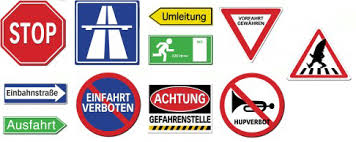
I will also say that I love that there are a lot of signs  - over 300 - to help point people in the right direction. If you know the rules and what the signs are telling you to do, then you won't have any problems, as long as everyone is following the rules... or if you are prepared to keep everyone safe.

At the beginning of our class, the instructor opened with this quote. "Your first job as a driver is to look out for other people, assume they will make a mistake, and then compensate so that everyone is as safe as possible."

And I thought, "That sounds a lot like what a life of faith should look like."

It's quite easy to fall into the habit of placing ourselves at the front of the line... to assume that our appointments or needs are ideas or more important or correct than others. Paul wrote to the Christians in Rome, reminding them that their call by God set them apart - in the ways they thought and acted.
"Don’t be conformed to the patterns of this world, but be transformed by the renewing of your minds so that you can figure out what God’s will is—what is good and pleasing and mature. Because of the grace that God gave me, I can say to each one of you: don’t think of yourself more highly than you ought to think. Instead, be reasonable since God has measured out a portion of faith to each one of you." (Romans 12:2-3 Common English Bible)
The news today is filled with stories of war and strife from almost every corner of the world. We develop the habit of thinking in terms of "them versus us," rather than being in this thing called life together. Maybe we have to start thinking about life in a whole new way, get out of our comfort zones, and pay attention to the needs of others around us. Only then, will the world have the chance to become that which God created it to be - a haven for God's creation, and a small piece of heaven on earth.

Peace, Deb

“It seemed to me that the people who made the rules of the road had figured out everything that would help a person drive safely right down to having a sign that tells you you're passing through a place where deer cross. Somebody should stick up some signs on the highway of life.

* CAUTION: JERKS CROSSING.
* Blinking yellow lights when you're about to to something stupid.
* Stop signs in front of people who could hurt you.
* Green lights shining when you're doing the right thing. 

It would make the whole experience easier.”     
                                   ― Joan Bauer, Rules of the Road (2005)